
Surviving the Year End Rush does not mean asking everyone to push harder until the Christmas break. It means working out what genuinely needs to happen, making the workload visible and giving people room to do their jobs without running on caffeine and goodwill.

Key Takeaways
| The pressure point | A practical response |
|---|---|
| Every task looks urgent | Separate fixed deadlines from negotiable dates and customary year-end habits. |
| Plans ignore colleagues’ availability | Work backwards from deadlines and include time for reviews, approvals and handovers. |
| Delegation creates new pressure | Agree what can move before transferring a task, and give the new owner time and context. |
| Calendars are full | Protect thinking time, shorten unnecessary meetings and make resets accessible. |
| People are showing signs of overload | Check in, identify what is driving the pressure and agree a concrete change. |
| The break is close | Leave a clear handover, agree what counts as urgent and make space for a gentler return. |
Separate essential deadlines from year-end habit
At the end of the year, a full calendar can make every task look equally urgent. Start by sorting work into three groups: fixed external deadlines, deadlines that could be renegotiated, and customary or self-imposed deadlines that may not need to happen before the break.
For each task, ask: What would actually happen if this moved into January? Prioritise work with a real impact on customers, safety, compliance or essential operations. A familiar deadline is not automatically a necessary one.
Then decide what can be deferred, simplified or dropped. Record the decision and name an owner, so postponed work does not quietly return as an urgent task for a colleague who had no part in the original conversation.
Keep: work with a clear external or operational consequence if it is late.
Renegotiate: work that matters, but has a date that can be agreed with the people who depend on it.
Defer or drop: work that is mainly driven by habit, preference or an arbitrary year-end finish line.
Make deadlines realistic around people and dependencies
A deadline is only realistic if the whole route to completion fits. Work backwards from the date and include the time needed for information, reviews, approvals and handovers, not just the hours required by the person doing the task.
Check when key colleagues and decision-makers will be available. If someone needs to approve the work, bring that request forward or discuss a new date before their absence creates a bottleneck.
When you need to negotiate, explain what the work involves, which priorities are already in progress and what the trade-off would be. Then offer a specific alternative: a revised date, or a smaller deliverable that can be completed in time.
For example, instead of quietly squeezing in a full report, agree to deliver the essential findings before the break and schedule the supporting detail for later. That makes the choice visible and gives everyone a clearer plan.
Review priorities as a team, especially when a new request arrives. We cannot make a sensible decision about workload management if new work is simply added to everyone’s list without checking actual team capacity.
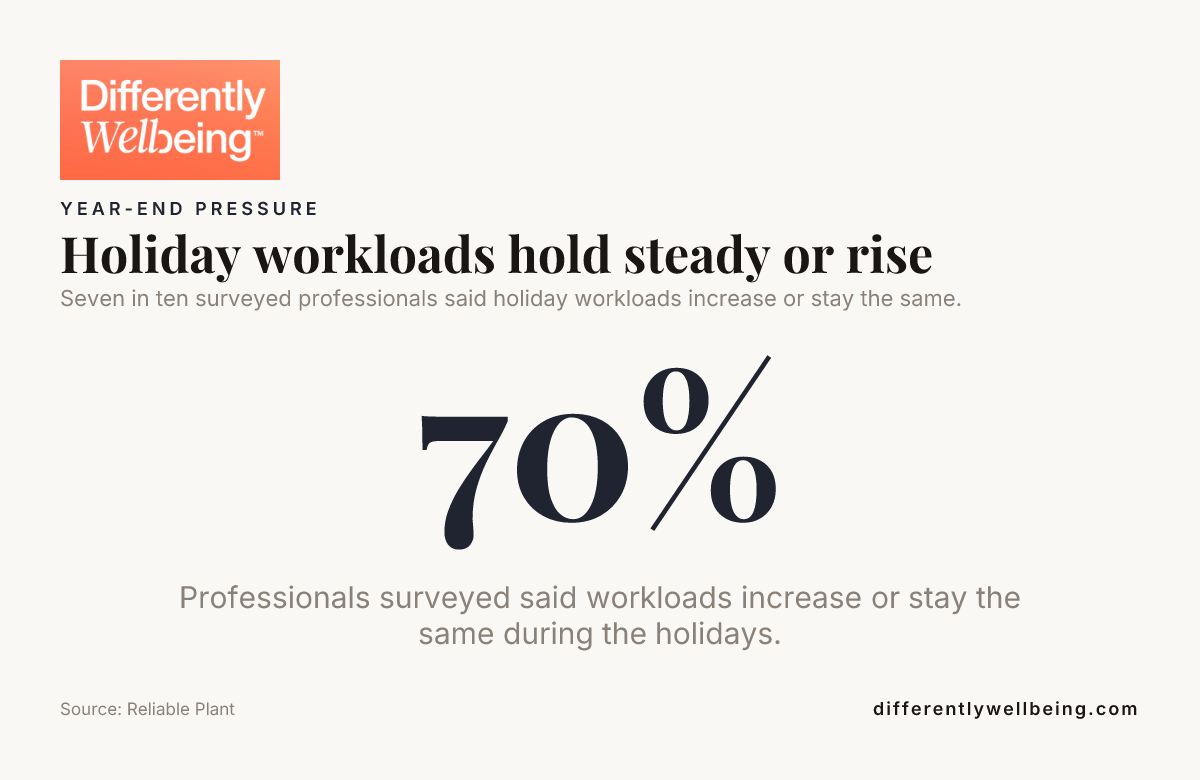
Seven in ten surveyed professionals said holiday workloads increase or stay the same.
Source: Reliable Plant

Share the workload without shifting the strain
Delegation can help a team get through a busy spell, but passing someone a task without making space for it only moves the pressure. Before you delegate, check the person’s current commitments and agree what should be deprioritised.
Give the new owner the context, authority, training and time they need to complete the work. This matters even more when seasonal staff are covering unfamiliar duties. A handover that explains the task but not the decisions behind it can leave people guessing when something changes.
If you expect seasonal demand to rise, plan early for staffing, equipment, workspace and backup arrangements. In warehouse operations, for example, seasonal staffing needs to be matched with role-specific training, suitable equipment and a clear understanding of how work flows through the space.
Contingency planning also means deciding what will change if demand exceeds capacity. Identify which service, task or turnaround time will be reduced, rather than relying on last-minute effort to keep everything moving.
Name an owner for each critical task and a backup for essential decisions. That way, one person’s absence does not leave the work stalled or turn the whole team into an informal escalation route.
Did You Know?
75% of adults have reported work as being a significant source of stress.
Source: Occupational Safety and Health Administration
Set boundaries around work and holiday commitments
When someone asks you to take on another task, make the existing workload visible. Try: “I can pick this up. Which of my current priorities should move?” It turns boundary setting into a practical conversation about capacity, instead of relying on hidden overtime.
Agree what colleagues can expect from one another over the break. Clear handover dates, availability and response times help people understand what can wait until everyone is back.
Social plans take time and energy too. Choose the events that matter to you, and leave room for rest, relationships and the personal priorities you want to carry into the new year. A full December diary is not a wellbeing plan.
Managers set the tone by keeping boundaries consistent across the team. If people are praised for routinely working late or staying reachable during agreed time off, the written policy will not feel like the real one.
Protect thinking time and build in short resets
When calendars fill up, people can spend the day talking about the work and the evening trying to finish it. Cut or shorten meetings that do not need to happen before the break, then protect blocks of uninterrupted time so priority work can be completed within working hours.
For a practical reset, our Corporate Wellbeing Sessions include yoga and desk yoga for teams.
Try a 15-minute movement break that gives people the chance to get away from their desks and out of their heads. Keep it optional and accessible, with choices for different abilities, energy levels and comfort with group movement.
Where the agenda suits it, take a meeting outside during daylight. A walking conversation can make space for fresh air and movement, while an indoor or seated option means colleagues who cannot or would rather not walk can still take part.
Corporate wellbeing and corporate wellness sessions can support a reset, but they are not a substitute for reducing an unrealistic workload. We are not here to offer a tick-box exercise or a fruit bowl in the kitchen while people are burning out or quietly quitting. The workload still needs attention.

Notice when pressure is becoming unsustainable
Look for sustained changes such as difficulty concentrating, repeated missed breaks, irritability, exhaustion or work regularly spilling into evenings. These are prompts to check in, not a diagnosis or a reason to judge someone’s performance.
Ask what is driving the pressure, then agree a practical response. That might mean reprioritising work, adjusting a deadline, adding support or clarifying who is responsible for a decision.
Encourage people to speak with their manager or appropriate workplace support when pressure is affecting their wellbeing. Follow up afterwards, because one conversation does not always resolve the cause.
Mindfulness and meditation sessions can give a team a pause to reflect. They can sit alongside everyday conversations about workload, responsibilities and what needs to change.
Did You Know?
76% of workers reported experiencing at least one symptom of a mental health condition in the past year, and 84% of employees say workplace conditions adversely impacted their mental wellbeing.
Source: Occupational Safety and Health Administration
Make team celebrations restorative and inclusive
A team celebration should feel like something people can enjoy, not another obligation squeezed into an already full month. Ask what would feel welcome and manageable, offer different ways to take part and avoid assuming everyone celebrates Christmas or has the same availability.
Keep activities within working hours where possible, and make attendance genuinely optional. A quiet alternative matters too, especially for people who find large social events tiring or do not want to drink.
For colleagues who would value a quieter experience, Sound Baths are meditative sessions using instruments such as crystal bowls, gongs and chimes. Participants lie down and relax, making this an option for teams who would welcome a calmer end-of-year activity.
There is no single right way to celebrate. Ask the team, listen to the answers and choose something that helps people connect without turning the event into a reward for getting through an excessive workload.

Close the year with a clear handover and a gentler return
Before leave begins, document the status of open work, its next action, its owner and any genuine escalation route. A useful handover lets someone understand what is happening without needing to guess or message the person who is meant to be off.
Agree what counts as urgent during the break and who is responsible for responding. Do not leave the whole team informally on call, with everyone wondering whether they are expected to check messages.
Plan a short return period to check what changed, review messages and reset priorities. Avoid filling every available hour on the first day back, and leave a buffer for unexpected issues.
If something urgent does arise, agree in advance which planned work can move. That small decision helps protect the team’s flow instead of making the first days back another round of competing deadlines.
Separating Real Deadlines
Surviving the Year End Rush is not about squeezing one more task out of tired people. It is about separating real deadlines from habit, planning around the people and dependencies involved, sharing work fairly and making the break a genuine break.
We do it because of what happens in the room, and in the working day around it. Protect thinking time, notice when pressure is building and make celebrations something people can choose to enjoy. If your team is looking for practical support, get in touch with Differently Wellbeing to talk through what could work for you.
Frequently Asked Questions
How can managers support employees with caring responsibilities during the holiday season?
Ask privately what would make work more manageable, without asking people to share personal details they would rather keep private. Where the role allows, offer options such as adjusted start times or joining a team activity in another way.
What should I do if year-end stress is affecting my sleep or physical health?
Tell someone you trust at work and speak with your GP or an appropriate health professional, especially if the impact is persistent or getting worse. Be specific about what has changed and what support would help you continue working safely.
Is it reasonable to take annual leave during a particularly busy period?
Yes, it is reasonable to request leave, and a busy period is a reason to plan cover rather than assume nobody can be away. Raise the dates as early as you can so your manager can consider the team’s coverage and discuss options with you.
How can a small team respond when everyone is already at capacity?
Make a short list of the commitments that cannot move, then agree which service levels or deliverables need to change. If the team cannot safely meet demand, communicate the revised scope to the people relying on the work rather than silently stretching everyone further.
How can a distributed team keep the year-end plan clear?
Keep one shared written record of decisions, owners, handover notes and the latest agreed deadlines. A single source of truth helps colleagues working different schedules or locations stay aligned without relying on a meeting for every update.