
Wellness at Work: How Yoga Transforms Employee Engagement and Workplace Performance
Most companies invest heavily in employee engagement strategies, yet 80% of workers worldwide remain disengaged or not engaged at work. Traditional wellness programmes often miss the mark because they treat symptoms rather than addressing the root causes of workplace stress and disconnection. Yoga offers a practical solution that tackles both the physical and mental aspects of employee wellbeing, creating a foundation for genuine engagement.

The growing wellness industry is worth billions, but many initiatives fail to deliver real results. Free gym memberships and meditation apps are useful perks, but they don't create the lasting change that organisations need. Yoga stands apart because it combines movement, mindfulness, and stress reduction in a way that directly impacts how employees feel and perform at work.
This article explores why yoga deserves a central role in employee engagement strategies. It examines the specific benefits yoga brings to the workplace, how to implement effective programmes, and ways to build a culture where wellness becomes part of daily work life. Readers will also learn how to measure success and overcome common challenges in workplace yoga implementation.
Why Employee Engagement Strategies Need Yoga
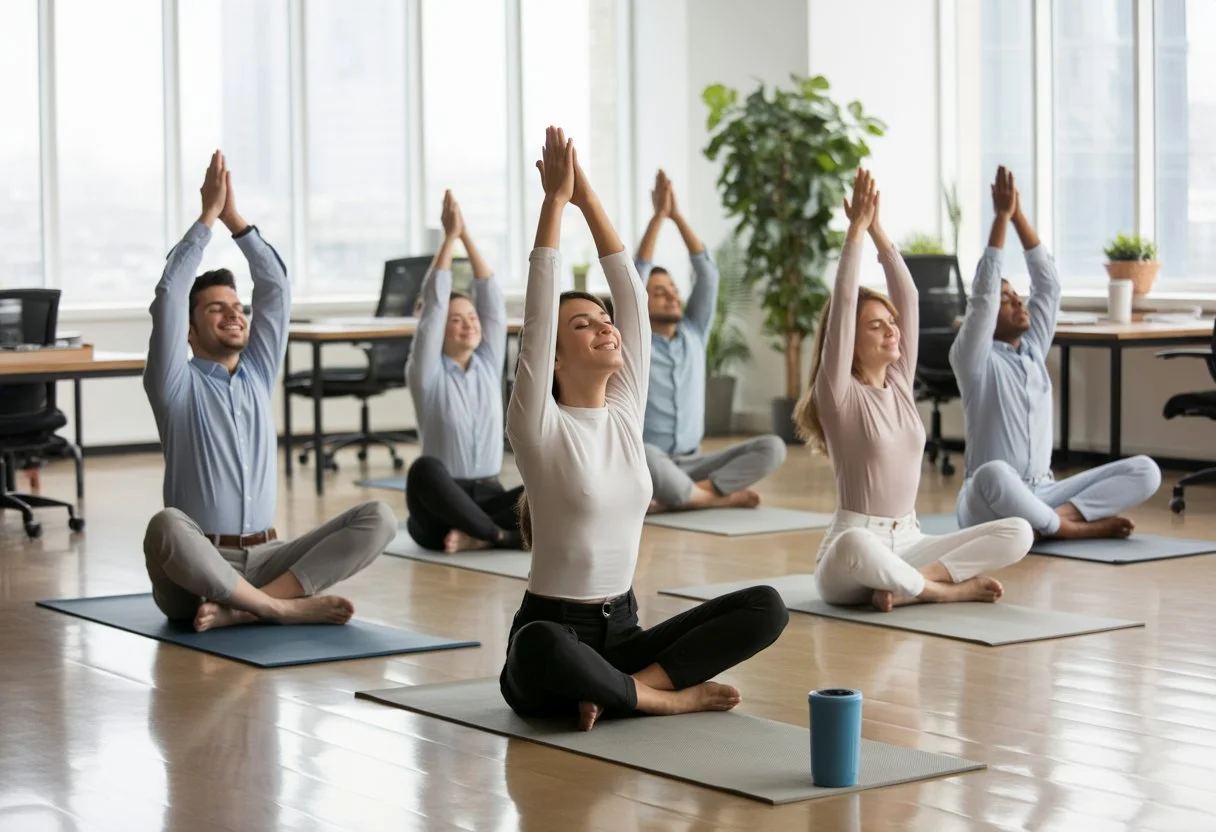
Only 23% of employees are actively engaged at work globally, whilst 44% experience high stress levels. Traditional workplace perks often fail to address the root causes of disengagement, leaving organisations struggling with absenteeism and low productivity.
The Hidden Challenges of Employee Disengagement
Employee disengagement costs organisations billions in lost productivity each year. Disengaged workers show up physically but contribute minimally to their roles.
The problem runs deeper than simple lack of motivation. Chronic stress affects cognitive performance, decision-making abilities, and workplace relationships. Employees dealing with unmanaged stress struggle to focus on tasks and often withdraw from team interactions.
High stress levels lead to increased absenteeism and higher healthcare costs. Workers experiencing burnout take more sick days and show reduced creativity in problem-solving. This creates a cycle where remaining team members face heavier workloads, spreading disengagement further throughout the organisation.
Common signs of disengagement include:
Reduced productivity and missed deadlines
Lower quality of work output
Increased conflicts between team members
Higher staff turnover rates
Shortcomings of Traditional Workplace Perks
Most companies offer standard benefits like gym memberships or employee assistance programmes. These perks often go unused because they require employees to seek wellness outside working hours.
Free snacks and casual Fridays fail to address the underlying causes of workplace stress. Employees need tools they can use during the workday to manage stress as it happens. Traditional perks treat wellness as separate from work rather than integrated into the daily routine.
Many workplace initiatives focus on physical health alone whilst ignoring mental wellbeing. Stress management requires both physical and mental approaches working together. Employees need practical strategies they can apply immediately when pressure builds during busy periods.
The Unique Value of Yoga in Engagement Initiatives
Yoga addresses both physical tension and mental stress simultaneously. Research shows yoga interventions improve job satisfaction and employee engagement whilst reducing absenteeism.
The practice offers immediate stress relief that employees can access during work hours. A 15-minute session helps workers reset mentally and physically without leaving the office. This accessibility makes yoga more practical than gym memberships or external wellness programmes.
Yoga improves cognitive performance and decision-making abilities. Studies demonstrate that regular practice enhances focus, memory, and problem-solving skills. These benefits directly impact work quality and productivity.
When organisations support wellness through yoga, employees feel valued and motivated. The practice creates a positive work environment where staff can manage stress effectively. Teams participating in workplace yoga show noticeably higher morale and better collaboration.
Holistic Benefits of Yoga in the Workplace
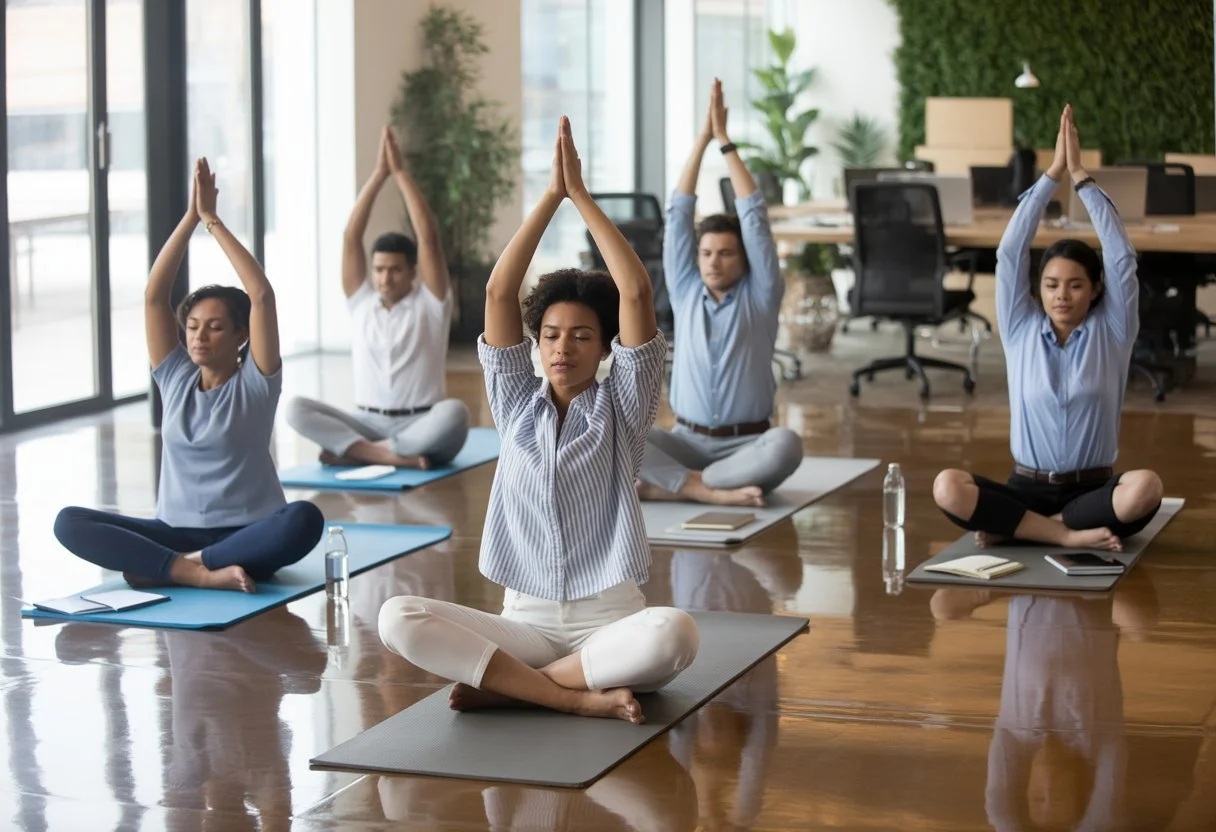
Yoga addresses employee wellness through multiple dimensions, targeting physical health concerns like chronic pain whilst simultaneously sharpening mental clarity and boosting workplace energy levels. These interconnected benefits create stronger teams and reduce the costs associated with absenteeism.
Enhancing Physical Health and Reducing Absenteeism
Desk work creates significant physical strain on employees' bodies. Extended sitting compresses the spine, weakens core muscles, and restricts blood flow to major muscle groups.
Yoga counteracts these issues through targeted poses that stretch tight hip flexors, strengthen back muscles, and improve posture. Simple movements like seated spinal twists and standing forward bends release tension in the neck and shoulders. Employees who practise workplace yoga report fewer headaches and reduced lower back pain.
The physical benefits translate directly into fewer sick days. Workers' poor health costs employers up to £8,000 per employee annually in lost productivity. Regular yoga practice strengthens immune function and reduces inflammation throughout the body. Companies offering yoga programmes see measurable decreases in absenteeism rates. Employees feel better physically and require less time off for chronic pain management or stress-related illness.
Improving Mental Clarity and Focus
Mental fog drains productivity throughout the workday. Stress hormones like cortisol interfere with the brain's ability to process information and make decisions.
Yoga breathing techniques reduce cortisol levels and activate the parasympathetic nervous system. This shift calms the mind and improves concentration. Employees learn to focus attention on breath and movement, which builds mental discipline that transfers to work tasks.
A 15-minute yoga session provides a reset for overstimulated minds. Workers return to their desks with sharper focus and better problem-solving abilities. The practice teaches employees to notice when their attention wanders and bring it back to the present moment. This skill proves valuable during complex projects that require sustained concentration.
Elevating Energy Levels and Alleviating Fatigue
Afternoon energy crashes affect most office workers. The body's natural circadian rhythm dips between 2:00 and 4:00 PM, making it difficult to maintain productivity.
Yoga poses increase oxygen flow to the brain and stimulate the nervous system without requiring caffeine. Gentle backbends open the chest and encourage deeper breathing. Standing poses engage large muscle groups, which wakes up the body naturally. Even five minutes of movement can shift energy levels from sluggish to alert.
Unlike coffee breaks that lead to crashes later, yoga provides sustained energy. The practice balances the body's systems rather than overstimulating them. Employees report feeling more energised throughout the entire afternoon when they incorporate brief yoga sessions into their day.
Fostering Teamwork and Camaraderie
Group yoga sessions create shared experiences amongst colleagues. Employees see each other in a different context outside normal work hierarchies. This breaks down barriers between departments and management levels.
Partner poses require communication and trust between participants. Workers must coordinate movements and support each other's balance. These interactions build rapport that carries over into collaborative work projects.
The vulnerability of trying something new together creates bonds between team members. Employees laugh at their wobbles and celebrate small improvements as a group. Regular yoga classes become a social touchpoint where relationships develop naturally. Teams that practise yoga together often communicate more openly and support each other more effectively during stressful work periods.
Integrating Yoga into Workplace Wellness Programmes
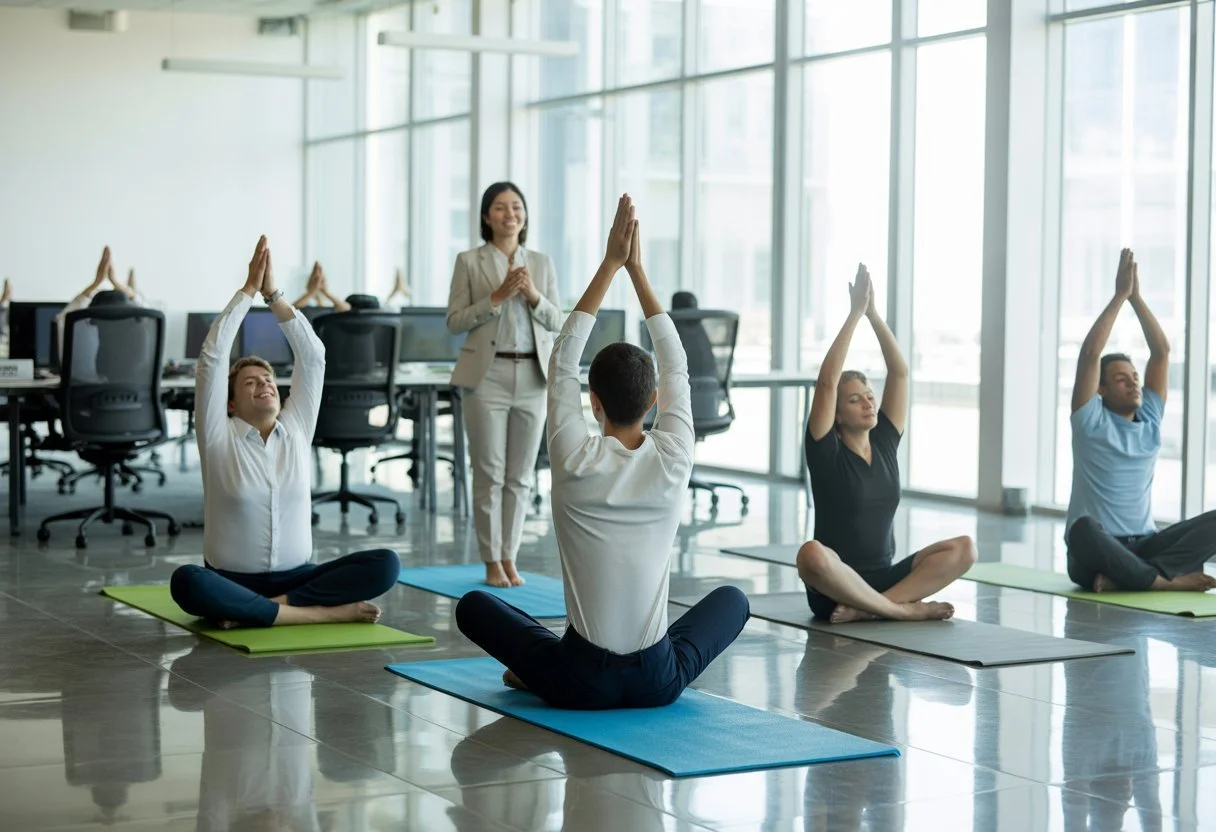
Companies can integrate yoga into wellness programs through flexible formats that accommodate different fitness levels and office spaces. The right scheduling and combination of physical practice with mindfulness techniques helps organisations maximise employee participation and engagement.
Tailored Approaches: Chair Yoga and Mat-Based Sessions
Chair yoga offers an accessible entry point for employees who cannot get down on yoga mats or feel uncomfortable with traditional yoga poses. This modified practice uses office chairs as props, allowing workers to stretch and strengthen muscles without changing clothes or leaving their workspace. Employees can perform neck rolls, seated twists, and gentle stretches during short breaks throughout the day.
Mat-based sessions provide a more comprehensive yoga experience for those seeking deeper physical practice. These classes typically run for 45 to 60 minutes and include standing poses, floor work, and relaxation techniques. Companies can designate a quiet room or meeting space where employees roll out yoga mats and participate in guided sessions.
| Format | Duration | Space Required | Clothing |
|---|---|---|---|
| Chair Yoga | 10-20 minutes | Individual workspace | Work attire |
| Mat-Based Yoga | 45-60 minutes | Dedicated room | Comfortable clothing |
Scheduling Yoga for Maximum Participation
Morning sessions before the workday starts attract employees who want to energise themselves and set a positive tone for the day. These classes typically begin at 7:30 or 8:00 AM and last 30 to 45 minutes.
Lunchtime yoga programs fit into the midday break and help workers reset mentally and physically. Offering sessions at 12:00 PM and 1:00 PM accommodates different lunch schedules across departments.
After-work classes provide a transition between office and home life. Sessions starting at 5:00 or 5:30 PM give employees a chance to decompress before their evening commute.
Promoting Mindfulness and Meditation Practices
Meditation and mindfulness complement physical yoga practice by addressing mental wellness alongside physical health. Brief five-minute breathing exercises can be introduced at the start of meetings to help teams focus and reduce tension.
Guided meditation sessions teach employees techniques they can use independently when feeling stressed or overwhelmed. These practices include body scans, breath awareness, and visualisation exercises that calm the nervous system.
Apps and online resources extend mindfulness beyond scheduled classes, allowing workers to access meditation tools whenever needed. Companies can provide subscriptions to meditation platforms or create quiet spaces where employees practice independently throughout the day.
Creating a Sustainable Yoga Culture
A workplace yoga programme only succeeds when it becomes part of the company's daily rhythm rather than a temporary initiative. This requires active involvement from leadership, strong team connections through shared practice, and regular updates based on what employees actually need.
Leadership Support and Participation
Leaders who practise yoga alongside their teams send a powerful message about the organisation's commitment to employee wellbeing. When managers join sessions or block out time in their calendars for yoga, it gives staff permission to prioritise their own wellness without guilt.
Leadership support goes beyond attendance. Senior staff should allocate proper resources for the programme, including suitable space, equipment, and qualified instructors. They need to communicate clearly that participation in wellness programmes is valued, not viewed as time away from "real work."
Managers can strengthen employee engagement by acknowledging the link between yoga practice and workplace performance. This might include mentioning wellness initiatives in team meetings or recognising departments with high participation rates. When leadership demonstrates genuine interest, participation rates typically increase across all levels of the organisation.
Building a Community Through Group Practice
Group yoga sessions create natural opportunities for employees from different departments to connect outside their usual work contexts. These interactions strengthen team dynamics and build relationships that often translate into better collaboration during regular work hours.
Setting consistent class times helps employees plan their schedules and creates routine. Offering sessions at different times—early morning, lunch breaks, or end of day—accommodates various work patterns and preferences. Some organisations find success with 30-minute express sessions for busy periods and longer classes when schedules allow.
Creating a dedicated space for practice signals permanence and investment in the programme. This doesn't require extensive renovation; a cleared meeting room with mats and props works well. Some companies establish peer champions who encourage colleagues to attend and share their positive experiences with the practice.
Continuous Feedback and Programme Evolution
Regular feedback collection ensures the yoga programme meets actual employee needs rather than assumptions about what staff want. Simple monthly surveys or feedback forms after sessions provide valuable data about preferred class times, styles, and instructor effectiveness.
Tracking participation patterns reveals what works and what doesn't. If attendance drops for certain class times or formats, adjustments can be made quickly. Employee wellbeing programmes must adapt to changing workforce needs, seasonal variations, and feedback about difficulty levels or session length.
Programme coordinators should review feedback quarterly and implement changes based on common themes. This might mean introducing different yoga styles, adjusting session duration, or adding specialised classes for specific concerns like back pain or stress management. Transparent communication about programme changes shows employees their input matters and maintains engagement with wellness programmes over time.
Measuring the Impact of Workplace Yoga
Companies that implement yoga programmes need reliable methods to evaluate their effectiveness and justify the investment. Tracking specific metrics helps organisations understand how yoga influences employee performance, satisfaction, and overall health outcomes.
Assessing Productivity and Focus Improvements
Measuring productivity changes requires both quantitative and qualitative data collection methods. Organisations can track metrics such as project completion rates, error frequency, and task efficiency before and after implementing yoga sessions.
Employee self-assessments provide valuable insights into perceived concentration levels and mental clarity. Many companies use simple rating scales where workers report their ability to focus during work hours. Research shows that workplace yoga interventions can reduce perceived stress, which directly correlates with improved cognitive function.
Managers can also monitor attendance patterns and meeting effectiveness. Workers who participate in regular yoga sessions often demonstrate better time management and decision-making abilities. Some organisations implement brief productivity surveys monthly to track trends over time.
Direct observation of work output quality offers another measurement approach. Teams that practise yoga together frequently show improved collaboration and communication, leading to better project outcomes.
Tracking Employee Satisfaction and Retention
Job satisfaction surveys serve as primary tools for measuring employee contentment with workplace yoga programmes. These surveys should include specific questions about work-life balance, stress levels, and overall workplace experience.
Retention rates provide concrete evidence of programme impact. Companies can compare turnover statistics before and after yoga implementation:
Pre-yoga implementation turnover rates
Post-yoga implementation turnover rates
Exit interview feedback mentioning wellness programmes
Length of employee tenure changes
Studies indicate that workplace stress negatively affects employee engagement and contributes to higher turnover. Regular measurement helps identify whether yoga addresses these concerns effectively.
Employee participation rates in yoga sessions also signal satisfaction levels. High attendance suggests workers value the programme and find it beneficial. Anonymous feedback forms after sessions capture immediate reactions and improvement suggestions.
Evaluating Overall Workplace Wellness Outcomes
Comprehensive wellness metrics extend beyond productivity and satisfaction measures. Healthcare costs and sick leave usage provide quantifiable data about employee health improvements.
| Metric | Measurement Method |
|---|---|
| Sick days taken | Monthly absence records |
| Healthcare claims | Insurance data analysis |
| Physical health markers | Optional health screenings |
| Mental health support usage | Counselling service data |
| Energy levels | Employee self-reporting |
Workplace wellness programmes that include yoga often show reduced stress-related health issues amongst participants. Organisations can track these changes through health insurance claims and occupational health reports. Blood pressure readings, reported sleep quality, and self-assessed energy levels offer additional wellness indicators.
Regular wellness assessments every quarter help establish patterns and demonstrate long-term benefits. Some companies use wearable technology data to track physical activity and recovery metrics amongst employees who consent to monitoring.
Frequently Asked Questions
Yoga programmes in the workplace raise practical questions about implementation, effectiveness, and measurable outcomes. Understanding how yoga influences engagement, productivity, mental health, and organisational success helps businesses make informed decisions about wellness strategies.
How does incorporating yoga into the workplace enhance employee engagement?
Workplace yoga creates opportunities for employees to participate in shared wellness activities during the workday. This demonstrates that employers value staff wellbeing beyond standard job requirements. When companies provide yoga sessions, employees feel supported in managing their physical and mental health.
Regular yoga practice builds a sense of community amongst colleagues. Group sessions encourage interaction between team members who might not normally work together. This strengthens workplace relationships and contributes to a more connected organisational culture.
Yoga also gives employees tools to manage workplace stress effectively. When staff members feel equipped to handle daily pressures, they tend to be more present and focused on their work. This increased sense of capability often translates to higher levels of engagement with job responsibilities.
What are the proven benefits of yoga for employee productivity and mental health?
Research shows that yoga improves concentration and mental clarity. Brief yoga sessions help employees refocus their attention after periods of intense work. This renewed mental energy often leads to more efficient task completion.
Yoga practice activates the parasympathetic nervous system, which reduces anxiety and promotes calmness. Employees who practise yoga regularly report lower stress levels and improved emotional regulation. These mental health benefits contribute to fewer sick days and better overall job performance.
Physical benefits include improved posture, reduced muscle tension, and increased energy levels. Employees who sit for extended periods experience less discomfort when they incorporate regular stretching and movement. Better physical health supports sustained productivity throughout the workday.
Can regular yoga practice reduce work-related stress and burnout?
Yoga provides specific techniques for managing stress responses in real time. Breathing exercises taught in yoga sessions can be used during challenging work moments to maintain composure. This gives employees practical tools they can apply immediately when stress levels rise.
Chronic workplace stress leads to burnout when left unaddressed. Yoga interrupts this cycle by creating designated time for rest and recovery. Even short sessions help employees step away from work demands and reset their mental state.
Studies indicate that consistent yoga practice lowers cortisol levels, the hormone associated with stress. Employees who participate in regular workplace yoga sessions report feeling less overwhelmed by their responsibilities. This reduction in perceived stress helps prevent the exhaustion and cynicism characteristic of burnout.
What approaches can businesses take to integrate yoga into their corporate wellness programmes?
Companies can start with weekly group sessions led by qualified instructors. These classes can take place onsite in a conference room or empty space, removing barriers to participation. Scheduling sessions during lunch breaks or just before or after work hours accommodates different employee schedules.
Some organisations offer virtual yoga sessions for remote workers or those with flexible arrangements. Online classes ensure all employees can access wellness benefits regardless of location. Recording sessions allows staff to practise at times that suit their individual needs.
Another approach involves providing yoga resources that employees can use independently. This might include subscriptions to yoga apps, instructional videos, or dedicated quiet spaces for self-directed practice. Companies can also subsidise yoga memberships at local studios as part of their benefits package.
What is the role of yoga in improving concentration and job satisfaction amongst employees?
Yoga includes specific practices designed to enhance focus and attention. Breathing techniques and meditation components train the mind to maintain concentration despite distractions. Employees who develop these skills find it easier to stay engaged with complex tasks.
Physical movement through yoga poses increases blood flow to the brain. This improved circulation supports cognitive function and mental alertness. Workers often report feeling more clear-headed and capable after participating in yoga sessions.
When employees feel physically comfortable and mentally balanced, their satisfaction with work tends to increase. Yoga addresses common workplace complaints such as fatigue, tension, and mental fog. By alleviating these issues, yoga contributes to a more positive experience of the work environment and job responsibilities.
How should a company measure the success of incorporating yoga into their employee engagement strategy?
Companies can track participation rates to gauge initial interest and ongoing engagement. Consistent attendance suggests employees value the programme and find it beneficial. Low participation may indicate scheduling conflicts or a need for better communication about available sessions.
Employee surveys provide direct feedback about perceived benefits and programme satisfaction. Questions might address stress levels, physical comfort, energy, and overall wellbeing before and after yoga implementation. This qualitative data reveals how yoga affects employees' day-to-day experience.
Organisations can also monitor relevant workplace metrics such as absenteeism, staff turnover, and productivity indicators. Reductions in sick days or improvements in performance reviews following yoga programme introduction suggest positive impacts. Health insurance claims data may show decreases in stress-related conditions amongst participating employees.