
World Mental Health Day 2026: A Different Approach to Workplace Wellbeing
A Different Approach to Workplace Wellbeing matters because the numbers behind workplace stress are not calming down, and many teams are still stuck in the same loop of “talks”, workload pressure, and spillover worry. Even more worrying, 84% of respondents said their workplace conditions had contributed to at least one mental health challenge.
Key Takeaways
| Go beyond awareness | World Mental Health Day should trigger real change in culture, not just another corporate talk. |
| Think holistic | Physical discomfort and mental strain are connected, so wellbeing needs to address both. |
| Use practical, repeatable sessions | We build workplace-friendly formats people can actually use after the session ends. |
| Target root causes | If toxicity is driving stress, symptom-only training will not fix it. |
| Make it easy to participate | Short lunchtime options, on-site drop-ins, and immersive experiences reduce friction. |
| Explore our sessions | Start with our Corporate Wellbeing Sessions, then build a plan that fits your people. |
| Talk to us | If you want something genuinely different, get in touch via our Get in Touch page. |
World Mental Health Day falls on 10th October this year, and we think it is a perfect moment to challenge the default workplace response. You know the one, the day where companies “raise awareness” and then return to the same pressures the following week.
At Differently Wellbeing, our view is simple. If wellbeing only gets attention for an hour, it is not wellbeing. It is theatre. We have built a different approach, holistic and practical, designed for real working life.
Why World Mental Health Day 2026 still feels urgent in workplaces
World Mental Health Day is often treated like a box-tick event, one more thing to schedule, one more message to send. But if you are a manager or HR lead looking at turnover, sickness absence, or just the mood in your teams, you already know the uncomfortable truth.
The nationwide mental health crisis persists. And in corporate settings, the “awareness campaign” pattern can unintentionally do harm. It makes employees feel like the company cares, but it does not change the day-to-day reality that created the stress in the first place.
This is why World Mental Health Day 2026: A Different Approach to Workplace Wellbeing is not about louder messaging. It is about practical intervention. It is about addressing what is actually happening at work, and helping people regulate their minds and bodies while culture catches up.
For teams, that means moving away from one-off lectures and towards experiences that reduce stress in the moment, teach usable techniques, and open space for longer-term cultural change.
Did You Know?
Depression and anxiety among employees cost the global economy an estimated $1 trillion in lost productivity each year.
The standard “mental health talk” has been done to death, and the crisis continues
Let’s be honest. In many workplaces, mental health content has become repetitive. The same phrases, the same slides, the same “you are not alone” messaging, delivered while workload stays the same.
We do not say this to dismiss support. People do need education and signposting. But education alone does not change the job design, the leadership behaviours, the meeting culture, or the pressure that makes people feel unsafe to speak up.
And even when training exists, the gap between what employees need and what the organisation offers can be huge. For example, many organisations still do not give line managers the practical capability to respond well when someone is struggling, and that is where workplace harm often spreads.
So, for World Mental Health Day 2026, we recommend a shift in emphasis.
From awareness to root causes.
From “coping” alone to removing the conditions that create stress.
From one-off sessions to a pattern of support that helps people on busy weeks, not just on awareness days.
We also think it is time to stop pretending that mental health is only an “employee problem”. When the environment contributes to distress, the workplace has a duty to respond.
Holistic wellbeing, explained simply (with Sadhguru’s insight)
Our approach starts with a question we think companies avoid because it is too fundamental. What is the body doing while the mind is stressed?
Sadhguru, an Indian mystic, puts it plainly. When you are in physical pain, it is nearly impossible to focus on anything else, including your mental, emotional, or spiritual development.
That insight underpins our belief at Differently Wellbeing that physical and mental health are inseparable. If someone is carrying headaches, tension, stiffness, and fatigue, trying to “think positive” or “manage stress” becomes dramatically harder.
That is why holistic workplace wellbeing is not just a wellness perk. It is foundational. When we help relieve physical strain and support the nervous system, we make it easier for people to process emotions, focus at work, and recover between intense days.
You can feel the difference in the room. People relax faster when their body is supported. They listen more deeply when they are not constantly bracing. And the techniques they learn have a better chance of sticking because their system is calmer to begin with.
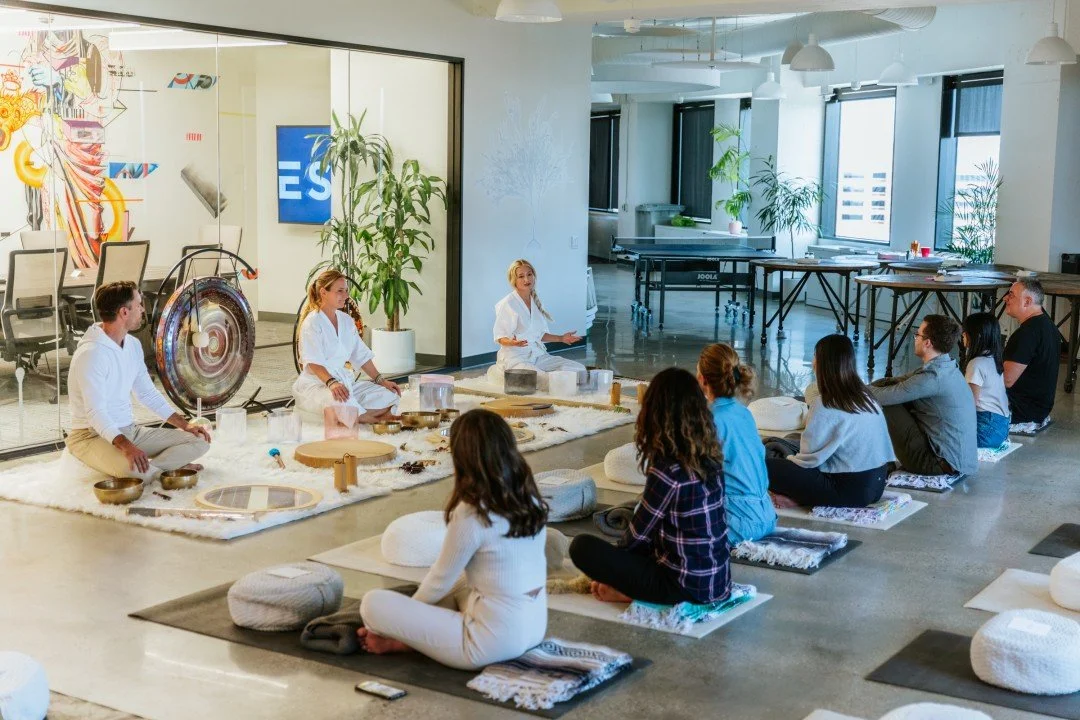
Meditations for Mental Health: immersive lunchtime relief and practical techniques
For World Mental Health Day 2026, one of the most requested formats is immediate relief that also teaches something people can take away.
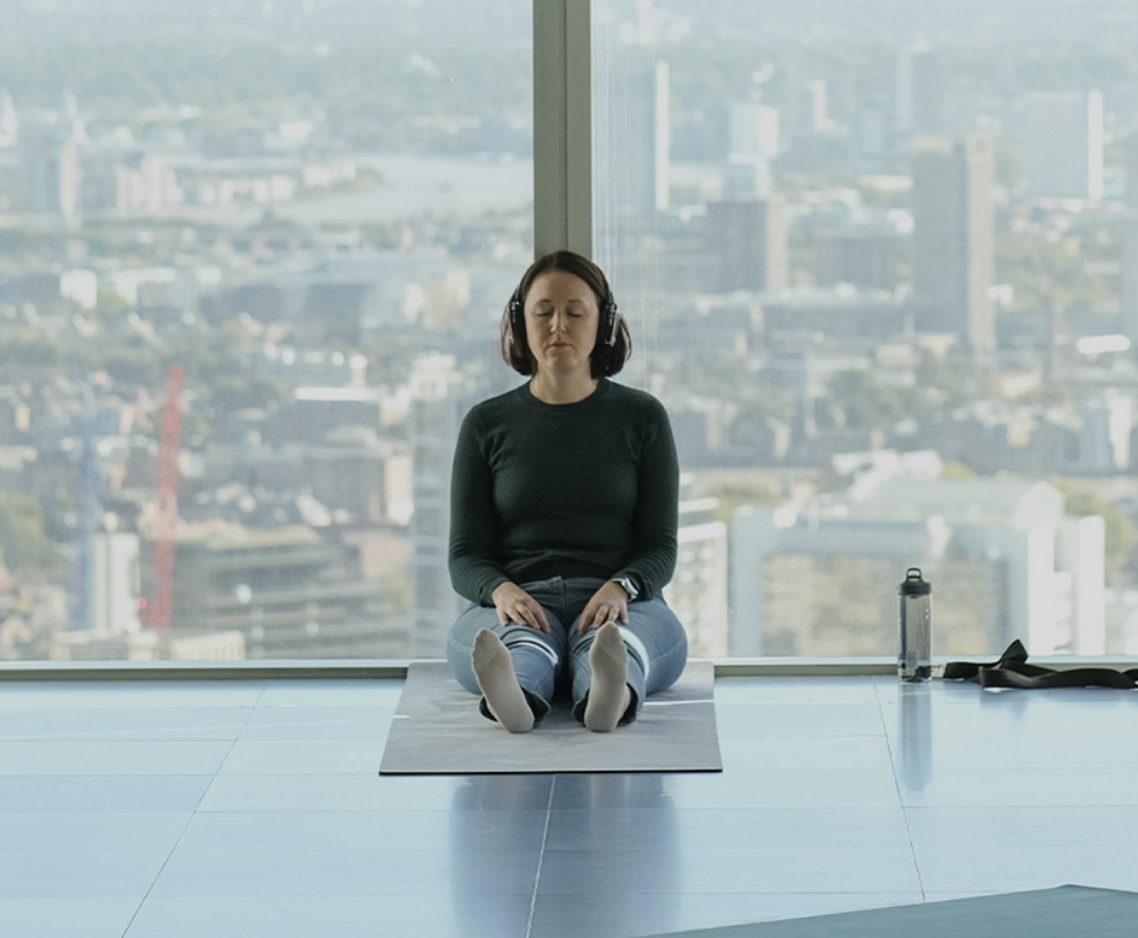
That is exactly what our session Meditations for Mental Health is built for. We include our signature ASMR meditation and the 5-4-3-2-1 anxiety-relieving technique. This grounding method helps shift attention away from spiralling thoughts by pulling awareness back into the present moment.
To make the experience truly immersive, we deliver the meditation through wireless silent disco headphones. The effect is simple but powerful. People feel cocooned away from their worries, and the mind can finally downshift.
We run it as back-to-back lunchtime sessions, which matters. Not everyone can attend a morning workshop, and not everyone wants to commit to a long event. Lunchtime access reduces the barrier to participation.
What you get in these lunchtime sessions:
Immediate relief for stressed minds and busy nervous systems.
Practical technique (5-4-3-2-1) people can use later at their desk.
A calm experience that does not require people to “perform wellness” in front of colleagues.
If your workplace is serious about a different approach to Workplace Wellbeing, this is the kind of intervention that fits real working life. It is supportive, short, and repeatable.
Fix toxicity, not just symptoms: tackling workplace culture for lasting change
If mental health talks are repetitive, workplace culture change is where most organisations stall. They focus on what people should do to cope, rather than what the workplace should stop doing.
That is why our second World Mental Health Day session is built to go upstream. Tackling Toxicity in the Workplace: A Workshop for Lasting Cultural Change addresses the root causes of bad mental health at work, not just the visible symptoms.
We work with the reality that many employees are stressed because of how the workplace behaves. That can show up as fear of speaking up, unclear expectations, constant urgency, or leadership patterns that unintentionally reward silence.
This workshop is designed to help teams and leaders understand:
How toxic patterns develop and repeat.
Why “awareness” does not fix culture.
What practical behaviours support better mental health day-to-day.
Importantly, this session is not designed to shame. It is designed to change what happens next. If you want your World Mental Health Day 2026 to be more than a one-day event, cultural change has to be part of the plan.
To explore the session page that covers mental health, nutrition, and workplace culture talks for corporate offices in London, visit: Mental Health, Nutrition and Workplace Culture Talks for corporate offices in London.

Our opinion: If you only teach individuals to “cope better” but do nothing to reduce workplace toxicity, you will spend money without creating safety.
Our workplace-proof point: the Brookfield Properties drop-in day that changed everything
Campaigns come and go. What matters is what happens in a workplace when we do something different.
Here is a real story that still guides us. At Brookfield Properties, which is now BGRE, we were invited to run a wellbeing drop-in day.
The typical workplace request would have been another talk. A lecture, a slideshow, a general talk about stress management. But we pitched something hands-on instead, physiotherapy and osteopathy drop-in support delivered at the workplace.
People did not just show up, they stayed. A hands-on option meant employees could address physical discomfort directly, and in turn, many people found their mental load reduced because their body felt supported.
It was so successful that it spawned three more years of regular sessions. Hundreds of people were treated compassionately at their place of work.
This is what we mean when we say holistic wellbeing is practical. It is not theoretical support. It is a service people can access without extra effort, in the environment that needs to change.
If you are considering A Different Approach to World Mental Health Day 2026 Workplace Wellbeing, this proof point matters. People do not need another awareness event. They need a programme that helps them function better, recover better, and feel supported by the culture around them.

Make wellbeing scalable, not fragile: build a programme, not a single event
World Mental Health Day 2026 should be the start of something, not a final flourish. The best workplace outcomes come when support is consistent and easy to access.
That is how we design our corporate sessions. We create scalable options that fit different team schedules and different energy levels. Some people need quiet. Some people need movement. Some people need both.
To help you picture how this can look, here are a few elements we commonly pair within workplace wellbeing programmes:
Movement for the nervous system, such as yoga or desk-friendly routines.
Breathwork and mindfulness for focus and resilience during demanding weeks.
Sound-based relaxation for stress reduction and recovery.
Culture work that addresses toxicity and leadership behaviours.
If you want to see the range of our workplace wellbeing options, start with Benefits of Workplace Yoga and browse how wellness supports both people and business outcomes.
Did You Know?
Only 29% of organisations train line managers in mental health.
How to plan your World Mental Health Day 2026 programme (without the fluff)
If you are trying to do something genuinely different this World Mental Health Day, start with a simple principle. Give people support that works in real time, then build culture change that lasts.
Here is a straightforward planning approach we recommend to companies:
Pick one immediate relief session (for example, our Meditations for Mental Health with ASMR and the 5-4-3-2-1 technique delivered via wireless silent disco headphones).
Pick one root-cause workshop that tackles toxicity, not symptoms (our Tackling Toxicity in the Workplace workshop).
Offer it in a low-friction format (such as back-to-back lunchtime sessions or on-site drop-in options).
Make it part of a wider calendar so employees keep getting support after the day is over.
We also encourage you to consider how wellbeing needs to travel beyond HR messages. Leaders, managers, and even building-level partners can help create the conditions where people feel safer.
If you are working across a wider workspace, our workspace partnership programmes are designed for monthly wellbeing support so tenant communities benefit consistently.
Invest in real, lasting change for World Mental Health Day 2026
World Mental Health Day 2026: A Different Approach to Workplace Wellbeing is our reminder that the “mental health talk” has limits. We need root-cause work, holistic support, and programmes that help people in the real conditions they experience every day.
That is why we offer sessions like Meditations for Mental Health with our signature ASMR meditation and 5-4-3-2-1 anxiety-relieving technique delivered through wireless silent disco headphones, plus Tackling Toxicity in the Workplace: A Workshop for Lasting Cultural Change that focuses on what drives bad mental health at work.
And we know it works because we have seen it on the ground, from workplace drop-in physiotherapy and osteopathy at Brookfield Properties (now BGRE) to the regular, compassionate sessions that followed for years.
If you want to go beyond awareness and invest in real, lasting change for your people, get in touch with Differently Wellbeing. We will help you design a programme that feels different because it is.
Book a discovery call with Differently Wellbeing
Frequently Asked Questions
What should we do for World Mental Health Day 2026 in the workplace?
For World Mental Health Day 2026, aim beyond a standard mental health talk. We recommend combining immediate stress relief, like our lunchtime Meditations for Mental Health, with root-cause cultural work such as Tackling Toxicity in the Workplace.
Is a mental health talk enough for workplace wellbeing?
Usually, no. A different approach to Workplace Wellbeing calls for more than awareness because the crisis is shaped by workplace conditions, not only by individual coping skills.
How does holistic wellbeing help employees with stress?
Holistic wellbeing addresses the body and the mind as connected systems. When people have physical discomfort, it becomes harder to focus and regulate emotions, which is why a different approach to Workplace Wellbeing includes body-based support and calm-down techniques.
What is the 5-4-3-2-1 technique and how does it help anxiety at work?
The 5-4-3-2-1 anxiety-relieving technique guides attention to the present moment by listing what you can sense. In our Workplace Wellbeing sessions, it is built into Meditations for Mental Health so employees get both immediate relief and a practical tool to use later.
Can workplace meditation really be immersive during lunch breaks?
Yes, when you remove friction and distraction. Our Meditations for Mental Health are delivered through wireless silent disco headphones for an immersive, cocooned experience, which is why they work so well as Workplace Wellbeing lunchtime sessions.
How do we tackle toxicity in the workplace without blaming individuals?
We focus on patterns, conditions, and leadership behaviours rather than shaming people. Our Tackling Toxicity in the Workplace workshop is part of the different approach to Workplace Wellbeing because lasting change requires addressing the root causes of bad mental health at work.
Where can we find Differently Wellbeing’s corporate workplace wellbeing sessions for World Mental Health Day?
You can explore options on our corporate wellbeing sessions pages, including the session covering nutrition, mental health, and workplace culture talks for corporate offices in London. For World Mental Health Day 2026, we recommend starting with our programme planning and then choosing the two sessions that match your team’s needs.