
Best Time of Day to Schedule Team Breathwork Sessions
Figuring out the best time of day to schedule team breathwork sessions is one of the most common questions we get from managers and HR leads who are serious about making corporate wellbeing actually work. And honestly? It matters more than most people think.
Get the timing wrong and you're fighting human biology, calendar chaos, and post-lunch brain fog all at once. Get it right and you've got a team that actually shows up, tunes in, and walks away feeling genuinely better. Let's break it down.
Key Takeaways

| Question | Quick Answer |
|---|---|
| What is the best time of day to schedule team breathwork sessions? | Mid-morning (9:30–11am) is the sweet spot for most teams. Energy is up, the day hasn't fully derailed yet, and people are actually present. |
| Is lunchtime good for breathwork? | Yes, with caveats. Lunchtime works well for short, restorative sessions but avoid immediately after eating (the 12:30–1pm window is tricky). |
| Should you do breathwork first thing in the morning at work? | A 9am breathwork session can be brilliant for energising, but only if your team actually arrives on time. Know your team culture before booking. |
| What time slot has the best team attendance for corporate wellness sessions? | Mid-morning and immediately post-lunch (around 1:30–2pm) consistently get the strongest turnout across our 150+ corporate clients. |
| How long should a team breathwork session be? | 30–45 minutes is the sweet spot. Long enough to feel the benefits, short enough that no one resents being there. |
| Does C-suite participation affect attendance at breathwork sessions? | Absolutely. If leadership shows up, so does the team. This has to come from the top. |
| Where can I book breathwork for my team in London? | Check out our breathwork, meditation and mindfulness sessions for fully tailored corporate bookings. |
Why Timing Actually Matters for Team Breathwork Sessions
We're not here to tell you to just "find a quiet Tuesday afternoon." That's lazy advice, and your team deserves better.
The best time of day to schedule team breathwork sessions is directly tied to your team's cortisol curve, meeting culture, and energy rhythms. Breathwork is incredibly powerful for stress reduction, nervous system regulation, and emotional release. But if you slot it in at the wrong point in the day, you're working against the very biology you're trying to support.
Since 2019, we've delivered thousands of sessions across 150+ corporate clients in the UK and abroad. We've seen what works and what absolutely doesn't. And we're not going to sugarcoat it.
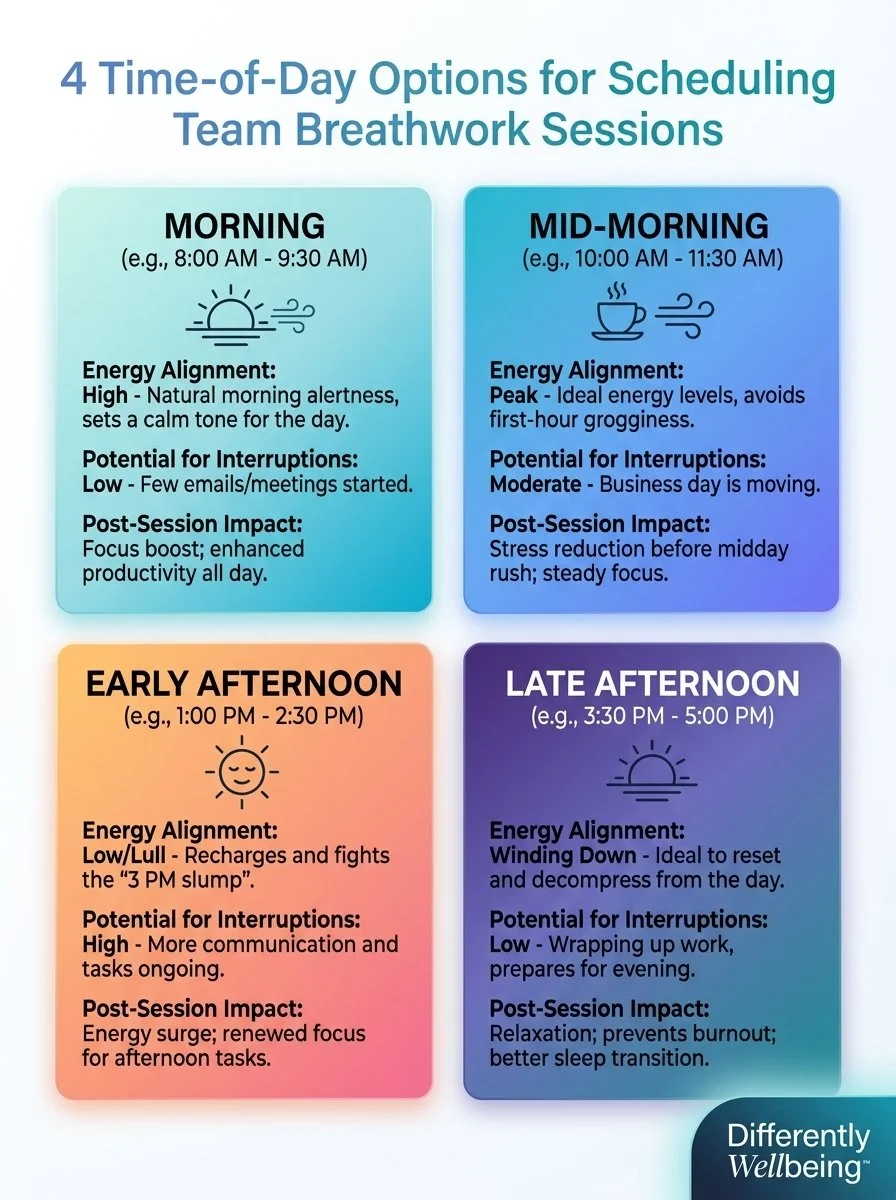
This infographic compares four practical time-of-day options for scheduling team breathwork sessions. See which slot best fits your team's rhythm.
Best Time of Day Option 1: Mid-Morning (9:30am to 11am)
Best for: Energy, focus, and maximum engagement.
This is the gold standard window. Cortisol levels are naturally elevated in the morning, which means your team is more alert, more receptive, and more likely to get genuine value from breathwork techniques like box breathing, ladder breathing, and vagus nerve stimulation.
A mid-morning corporate wellness breathwork session also acts as a reset before the day's stress fully accumulates. It's like giving your team a clean slate before the emails start piling up.
Pros: High energy, good focus, people haven't yet been beaten down by the day
Pros: Cortisol is naturally supporting alertness (not fighting it)
Cons: You'll compete with morning meetings, especially on Mondays
Cons: Remote workers may be slower to join if they're still settling in
Our Supercharge Your Focus session is purpose-built for this slot. It's designed to cut through the mental clutter and set the team up for a genuinely productive morning. No fluff, no fuss. Just science-backed breathing that works.
"All that is needed is a chair. No change of clothes necessary. Simple practices which yield incredible benefits when practiced regularly." — Differently Wellbeing
Best Time of Day Option 2: The Post-Lunch Reset (1:30pm to 2:30pm)
Best for: Calming the post-lunch crash and re-engaging a scattered team.
The early afternoon dip is real. Blood sugar fluctuations after lunch cause a predictable slump in focus and motivation, typically hitting hardest between 1pm and 3pm. A well-timed breathwork session in this window can completely flip that energy around.
This is one of the most underused slots in corporate wellbeing planning, and honestly, it's one of our favourites. A 30-minute breathwork and mindfulness session at 1:30pm can restore clarity, reduce irritability, and get your team back on track for the afternoon ahead.
Pros: Attendance is often high because lunch breaks are already blocked
Pros: Perfect counter to the afternoon slump
Pros: Calming techniques work brilliantly here (box breathing, 4-7-8 breathing)
Cons: Avoid scheduling immediately after people eat (give a 30-minute gap)
Cons: Can be harder to coordinate across hybrid teams
This is also a great slot for our Monthly Breathwork Sessions, where we teach techniques like ladder breathing and vagus nerve stimulating practices. Regular sessions in this window genuinely compound over time.
Best Time of Day Option 3: Start-of-Day Energiser (8:45am to 9:15am)
Best for: High-energy teams, start-up cultures, and teams that actually arrive on time.
We'll be straight with you. This one only works if your team culture supports it. If people are rolling in at 9:20am clutching their coffee, a 9am breathwork session is going to feel like a punishment, not a perk.
But for teams with strong punctuality, a start-of-day breathwork session is genuinely powerful. It sets a collective tone. It signals that corporate wellness isn't something bolted on at the end of a busy week. It's part of how this team operates.
Pros: Sets a powerful, intentional tone for the day
Pros: More energising techniques land brilliantly (stimulating breath, rhythm breathing)
Pros: Low meeting competition, especially mid-week
Cons: Commuters and remote workers may struggle
Cons: Requires genuine cultural buy-in, starting from leadership
And on that note: this is non-negotiable. If leadership isn't showing up, neither will your team. This HAS to come from the top. Full stop.
Best Time of Day Option 4: End-of-Day Wind-Down (4:30pm to 5:30pm)
Best for: Stress release, nervous system reset, and helping people actually switch off after work.
This is the most underestimated slot in the game. End-of-day breathwork sessions, when done right, help your team physically close the loop on the working day. Techniques focused on parasympathetic activation (vagus nerve stimulation, slow exhale work) are ideal here.
We often pair end-of-day breathwork with our Sound Bath sessions for a deeper, more immersive nervous system reset. The combination is powerful and it's become a genuine favourite with our clients.
Pros: Perfect for stress relief and cortisol reduction
Pros: Pairs beautifully with sound baths, guided meditation, and mindfulness
Pros: Great for wellbeing days or end-of-quarter events
Cons: Attendance can drop as people rush to leave
Cons: Less effective for energy-boosting goals
Timing Comparison: Which Slot is Best for Your Goals?
| Time Slot | Best For | Attendance Risk | Recommended Session Type |
|---|---|---|---|
| 8:45am to 9:15am | Energising, focus-setting | Medium (commuter-dependent) | Energising breathwork, stimulating breath |
| 9:30am to 11am | Peak focus, maximum engagement | Low to Medium | Box breathing, ladder breathing, focus sessions |
| 1:30pm to 2:30pm | Afternoon reset, stress reduction | Low (great for attendance) | Calming breathwork, guided meditation |
| 4:30pm to 5:30pm | Nervous system wind-down, switch-off | Medium to High | Restorative breathwork, sound baths |
The Corporate Wellbeing Factor: Why Breathwork Timing Impacts ROI
Here's the thing nobody in corporate wellness wants to say out loud: the best breathwork session in the world is useless if nobody shows up.
We've been in rooms with incredible facilitators, brilliant programming, and zero attendees. Not because people don't care, but because the timing was completely at odds with their reality.
At Differently Wellbeing, our three pillars are RELAX. ENERGISE. UPSKILL. And each of these maps differently to times of day. Energise sessions belong in the morning. Relax sessions belong post-lunch or end of day. Upskill sessions (workshops on the power of the breath, email apnea, anxiety management) work brilliantly mid-morning when cognitive bandwidth is at its highest.
Stop treating breathwork as a tick-box exercise and start treating it as a genuine performance tool. The companies getting the best results from their corporate wellbeing programmes are the ones who think carefully about when they deliver sessions, not just what they deliver.
What Day of the Week Works Best for Team Breathwork?
Tuesday, Wednesday, and Thursday. Every time. Here's why.
Monday is still decompression from the weekend. Friday is a battlefield of deadlines, early finishes, and general chaos. But Tuesday through Thursday? That's when your team is at genuine peak performance, and it's when scheduling a breathwork session during any of our recommended windows will land best.
Tuesday mid-morning: Absolute sweet spot for focus-based breathwork
Wednesday post-lunch: Great mid-week reset for an increasingly stressed team
Thursday end of day: Brilliant for winding down before the Friday sprint
Avoid Monday morning like the plague. And if you're booking a Friday afternoon breathwork session, you're going to need a very compelling pitch to the team.
How Breathwork Fits Into Your Wider Corporate Wellness Strategy
One breathwork session isn't going to fix burnout. We'll say it, even if it's not what you want to hear.
Meditation and mental health sessions alone "often is not enough." That's why we built our 360-degree holistic approach across body, mind, energy, emotions, and culture. Breathwork is one powerful piece of a much bigger puzzle.
Pair your breathwork sessions with complementary corporate wellbeing offerings and you start to see real cultural change. Think about layering in our desk yoga sessions in the morning and breathwork post-lunch. Or combine a breathwork workshop with one of our mental health and wellness workshops for a full half-day programme.
The companies tackling root causes of poor mental and physical health, not just symptoms, are the ones building workplaces people actually want to be in.
Practical Tips for Maximising Team Breathwork Attendance
Get C-suite buy-in first. If your CEO or senior leadership team attends, turnout goes up dramatically. This is not optional if you want real culture change.
Block it in diaries at least 2 weeks in advance. Decision fatigue and calendar chaos are real barriers. Get ahead of them.
Keep it to 30–45 minutes. Anything longer and you're asking too much of busy teams. Shorter sessions with high consistency beat long sessions with poor attendance every time.
Choose mid-week, mid-morning for maximum impact. The research backs it up, and so does our data from 1000s of sessions delivered since 2019.
No kit required. Our breathwork sessions need nothing except a chair. No mats, no change of clothes, no special equipment. Remove every possible barrier to attendance.
Run a 5-day breathwork challenge to build the habit. Our 5-Day Meditation Challenge (as used by Lidl UK) is brilliant for building consistent engagement before moving to monthly sessions.
The Email Apnea Problem (and Why Timing Your Breathwork Right Solves It)
Here's a stat that should make you put down your coffee: most office workers unconsciously hold their breath while reading emails. It's called email apnea, and it's quietly wreaking havoc on your team's nervous systems, focus, and productivity.
A mid-morning or post-lunch breathwork session is one of the most direct counter-measures to this problem. It resets breathing patterns, reduces background anxiety, and trains your team to notice when they've slipped into shallow, stress-driven breathing.
We cover this in detail in our Workshop: Email Apnea - What Is It? It's one of our most popular corporate wellness sessions, and for good reason. People genuinely don't know this is happening to them until someone shows them the data.
Want to understand more about our full breathwork offering? Explore our breathwork, mindfulness and meditation sessions in detail, including specific session themes and programme options.
Conclusion: The Best Time of Day to Schedule Team Breathwork Sessions
Let's keep it simple. The best time of day to schedule team breathwork sessions is mid-morning (9:30am to 11am) for focus and energy goals, and post-lunch (1:30pm to 2:30pm) for stress relief and re-engagement. These two windows consistently deliver the highest attendance, the strongest engagement, and the most meaningful outcomes across our entire client base.
But the honest truth? The best time is the time your team will actually show up for. That means thinking about your culture, your leadership buy-in, and your team's real daily rhythms, not just picking a slot that looks good in a calendar.
We've been delivering expert-led, tailored corporate wellbeing sessions since 2019, across 150+ clients in the UK and abroad. We know what works. And we're not here to sell you a generic package and disappear. We're here to help you build something real.
Ready to find the right timing for your team? Book a session with us and we'll work with you to design a programme that actually fits your team's world. No pretentiousness. No fluff. Just breathwork that genuinely works.
#DoItDifferently
Frequently Asked Questions
What is the best time of day to schedule team breathwork sessions for maximum engagement?
Mid-morning, between 9:30am and 11am, consistently delivers the best engagement for team breathwork sessions. Cortisol levels are naturally elevated, team members are alert, and the session can set a productive tone for the rest of the day before meeting overload kicks in.
Is it okay to do a team breathwork session right after lunch?
Give it a 30-minute gap after eating before starting breathwork. The 1:30pm to 2pm window is ideal for a post-lunch breathwork session as it counters the afternoon energy dip without asking people to breathe on a full stomach.
How long should a corporate breathwork session last?
30 to 45 minutes is the sweet spot for corporate breathwork sessions. It's long enough for participants to experience genuine nervous system benefits, and short enough to fit into a working day without resistance from even the busiest teams.
Does the day of the week matter when scheduling team breathwork sessions?
Yes, it matters quite a bit. Tuesday, Wednesday, and Thursday are the strongest days for scheduling team breathwork sessions. Monday mornings and Friday afternoons both come with cultural and calendar challenges that tend to reduce turnout and engagement.
How do I get my team to actually attend corporate wellness breathwork sessions?
Leadership participation is the single biggest driver of attendance at corporate wellness sessions, so if your C-suite isn't showing up, don't expect the team to either. Beyond that, block diaries well in advance, keep sessions to under 45 minutes, and choose a mid-week, mid-morning slot for the best results.
Can team breathwork sessions be done without any equipment?
Absolutely. Breathwork is one of the most accessible corporate wellbeing sessions available because all you need is a chair. No mats, no kit, no change of clothes required, which makes it incredibly easy to run in any office environment without logistical headaches.
How often should a company run team breathwork sessions?
Monthly breathwork sessions are a solid baseline for building genuine, lasting habits across a team. For companies wanting faster results, a 5-day breathwork challenge is a brilliant way to build momentum and engagement before moving into a regular monthly programme.